
 Przypnij
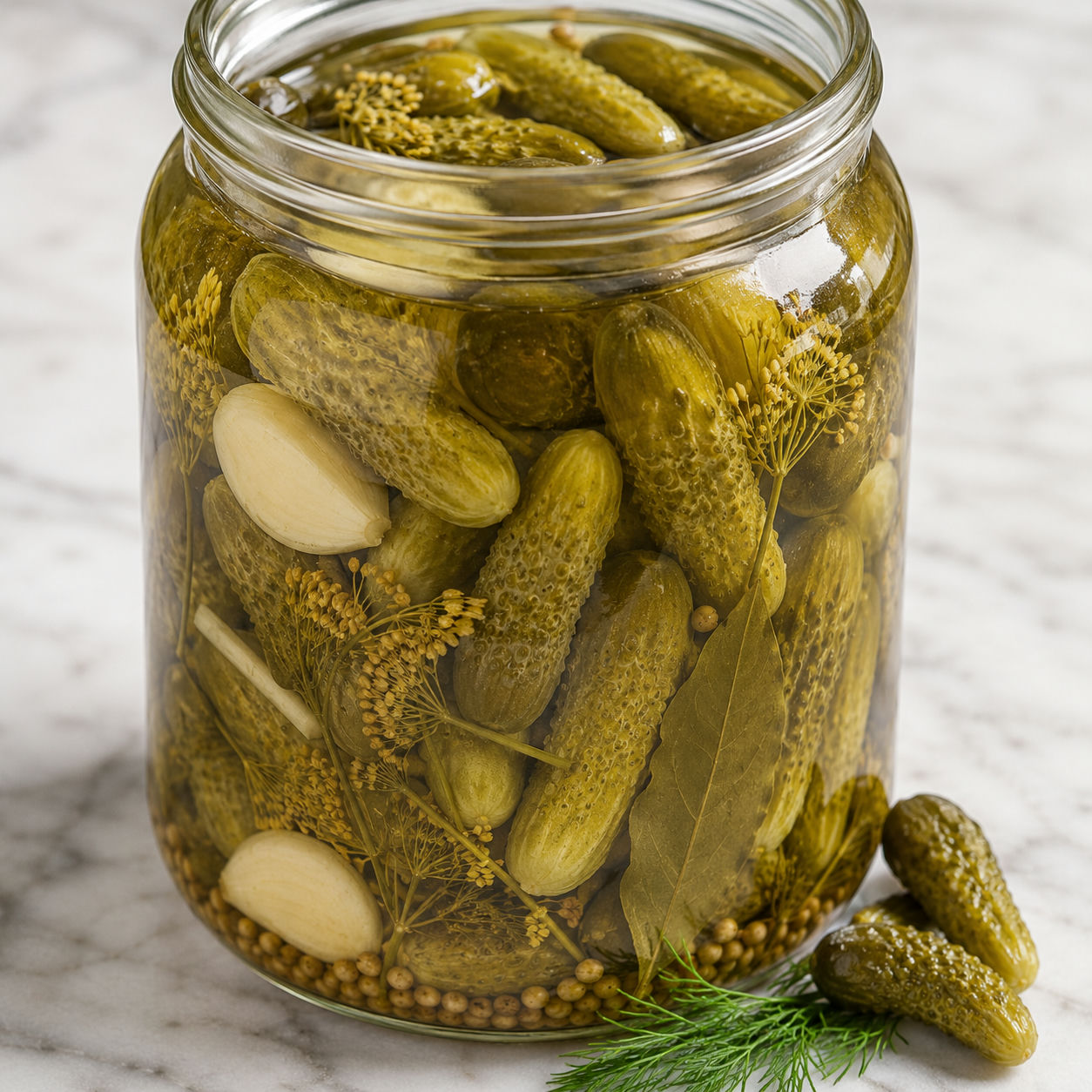
My grandmother filled her cellar with jars like these every August, and the mini cucumbers were always the ones she kept for herself. They're small enough to eat whole, straight from the jar, without the soft seedy middle you get in the bigger ogórki.
Garlic and fresh dill do the heavy lifting here. A short hot water bath locks in that snap so the pickles stay crunchy on the shelf for months instead of turning soft after a few weeks.
If you've got a bag of small cucumbers from the garden or the farmers market and a free afternoon, this is the recipe to grab.
What Goes Into the Jar
Small, firm cucumbers make or break this recipe. Look for ones under 4 inches (10 cm) with no soft spots or yellowing, the kind sold as pickling or mini cucumbers at a farm stand. Fresh dill heads with their seed umbels give a rounder flavor than dried dill weed.
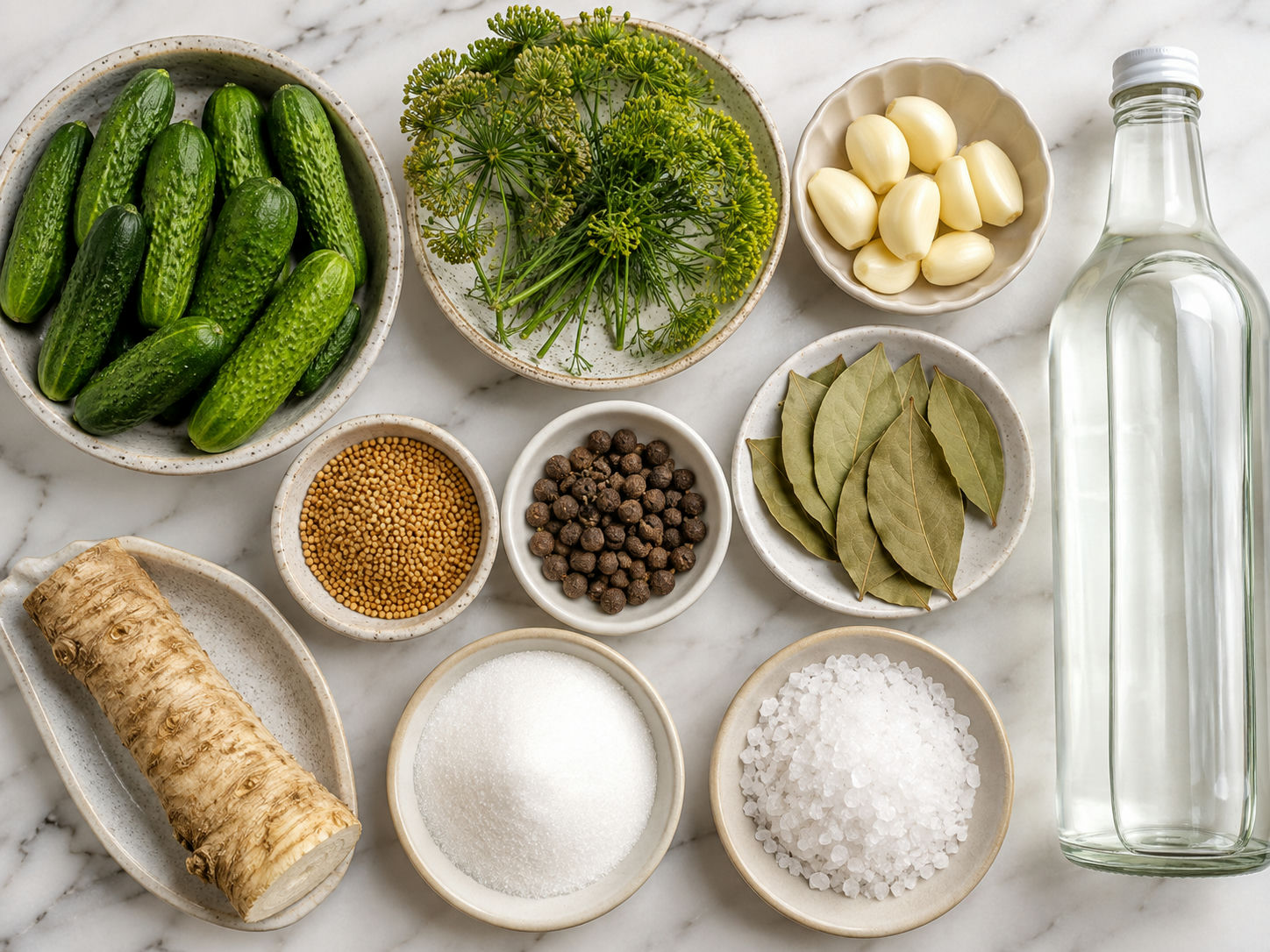
- Mini cucumbers. The star of the jar, small enough to fit whole and stay crunchy after processing.
- Fresh dill. Whole heads with the seed umbels give a rounder, slightly nutty flavor than chopped dill weed.
- Garlic cloves. Left whole, they mellow in the hot brine and season every cucumber around them.
- Bay leaves. A quiet background note that keeps the brine from tasting one-note sweet or sour.
- Mustard seeds and allspice berries. The classic Polish spice pair, they add warmth without making the brine spicy.
- Horseradish root. Optional, but a small piece in each jar helps the cucumbers stay firmer for longer.
- Spirit vinegar. The acid that preserves the cucumbers and gives them their sharp, clean bite.
- Sugar and coarse salt. Balance the vinegar and pull moisture out of the cucumbers so the brine can move in.
Packing and Sealing the Jars
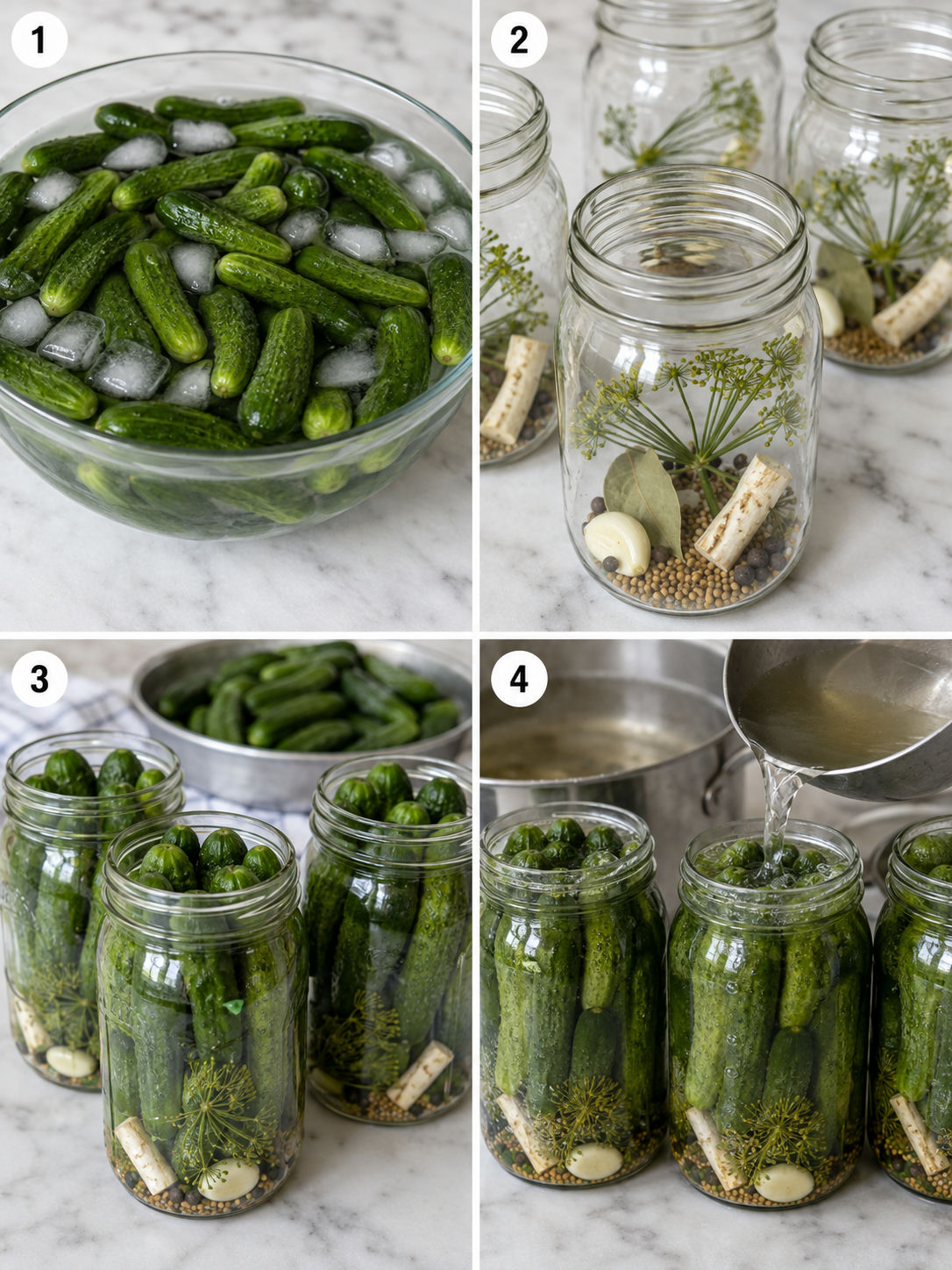
- Soak the cucumbers. Wash them well and drop them into a bowl of ice-cold water for 1 to 2 hours. This firms them up before they hit the hot brine.
- Sterilize your jars. Wash pint (500 ml) jars and lids in hot soapy water, then rinse with boiling water and dry them upside down on a clean towel.
- Layer the aromatics. Into each jar, put a dill head, one or two garlic cloves, a bay leaf, a teaspoon of mustard seeds, a few allspice berries, and horseradish if using.
- Pack the cucumbers. Stand the cucumbers upright in the jars, packing them in snugly. A tight pack keeps them from floating once the brine goes in.
- Boil the brine. Combine the water, vinegar, sugar, and salt in a pot. Bring to a boil, stirring only until the sugar and salt dissolve.
- Fill and process. Pour the boiling brine over the cucumbers, leaving about 1/2 inch (1 cm) of headspace. Seal the lids, set the jars in a pot lined with a folded towel, cover with water to 3/4 of their height, and simmer for 8 to 10 minutes once the water returns to a boil.
Why the Ice Water Soak Matters
Cold water does something simple but important before the cucumbers ever meet the brine. It firms the cell walls through osmosis, the same reason a wilted stalk of celery snaps back to life in ice water. Skip this step on a cucumber straight from a warm counter and you'll notice it later, the pickles come out a little softer than they should.
If you'd rather skip vinegar altogether and let bacteria do the souring instead, my ogorki kiszone use a salt brine and a few days on the counter for a completely different, funkier pickle. Both start from the same cucumber, they just end up in different places.
Keeping the Crunch After Canning
A small piece of horseradish root or leaf in each jar isn't just tradition, it adds tannins that slow the enzymes responsible for mushy pickles. Grape leaves or oak leaves do the same job if that's what you have on hand.
Time in the hot water bath matters just as much. Ten minutes past a boil seals the jars and takes care of anything that would spoil the batch, any longer and the cucumbers start to soften from the inside. The National Center for Home Food Preservation has good general guidance on safe processing times if you're canning a bigger batch than this recipe makes.
Adjusting Vinegar for Your Kitchen
Polish spirit vinegar is typically 10 percent acidity, stronger than the 5 percent white vinegar sold in most American grocery stores. If that's what you have, don't just swap it cup for cup, the brine will come out too mild to preserve the cucumbers safely. Use twice the volume of 5 percent vinegar and reduce the water by the same amount, or look for pickling vinegar labeled at a higher strength.
Vinegar strength is the one place not to improvise. It's what makes these shelf-stable in the first place, so when in doubt, lean toward more vinegar rather than less. For general guidance on safe home canning acidity, see FoodSafety.gov.
What to Serve Them With
These pickles earn their keep next to rich, fatty foods. A jar alongside roast pork with garlic and marjoram cuts through the meat exactly the way you want. Chop a few into potato salad, tuck them into a sandwich, or set a small bowl out with cold cuts and bread for a Sunday spread.
If you like the idea of pickled cucumbers but want something with more heat, my ogorki po zbojnicku add onion and curry powder to the same base brine. For a fresh, unpickled side that leans on the same cucumber and dill pairing, mizeria comes together in ten minutes with sour cream.
Storing the Finished Jars
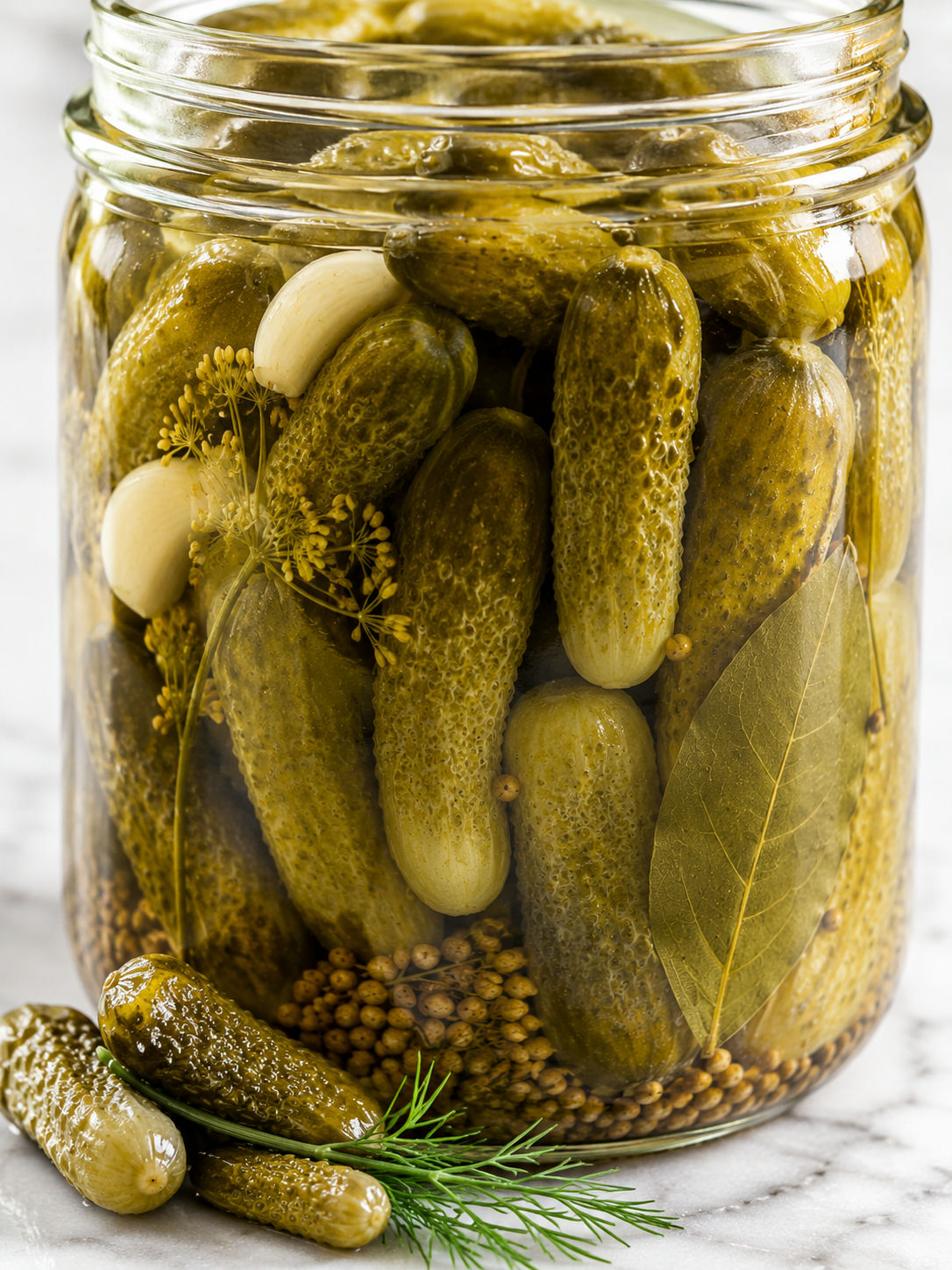
Properly sealed jars keep in a cool, dark pantry for up to a year, though the flavor is best within the first six months. Wait at least two weeks before opening one, the cucumbers need that time to fully take on the garlic and dill.
Once a jar is open, move it to the fridge and eat the pickles within about a month. Save the leftover brine too, it works well for a quick batch of pickled onions or a splash in potato salad dressing.
Najczęściej zadawane pytania
- Can I use regular cucumbers instead of mini ones?
You can, but cut them into spears or quarters first since large cucumbers pack awkwardly whole and take longer for the brine to reach the center. The seedy core also turns softer than the crisp mini cucumbers do.
- How long do mini pickled cucumbers with garlic and dill last?
Sealed and unopened, they keep in a cool pantry for up to a year. Once you open a jar, refrigerate it and eat the pickles within about a month.
- Do I have to process the jars in hot water?
Yes, for shelf-stable jars the hot water processing is what seals the lids and makes the pickles safe to store at room temperature. Skipping it means treating them as refrigerator pickles instead, good for about a month in the fridge.
- What if I don't have 10 percent spirit vinegar?
Use standard 5 percent white vinegar but double the amount and reduce the water by the same volume. That keeps the brine strong enough to preserve the cucumbers safely.
- Why did my pickles turn out soft instead of crunchy?
The usual causes are cucumbers that weren't fresh enough, skipping the ice water soak, or leaving the jars in the hot water bath too long. A piece of horseradish or a grape leaf in each jar also helps keep them firm.
- Can I make this recipe with fewer cucumbers?
Yes, just scale the aromatics per jar rather than the whole batch. Each pint jar gets its own dill head, garlic, bay leaf, and spices no matter how many jars you end up filling.
- Can I add heat to the brine?
A small dried chili or a few slices of fresh chili in each jar works well alongside the garlic and dill. Add it when you layer in the other aromatics so it has time to infuse.
