
 Przypnij
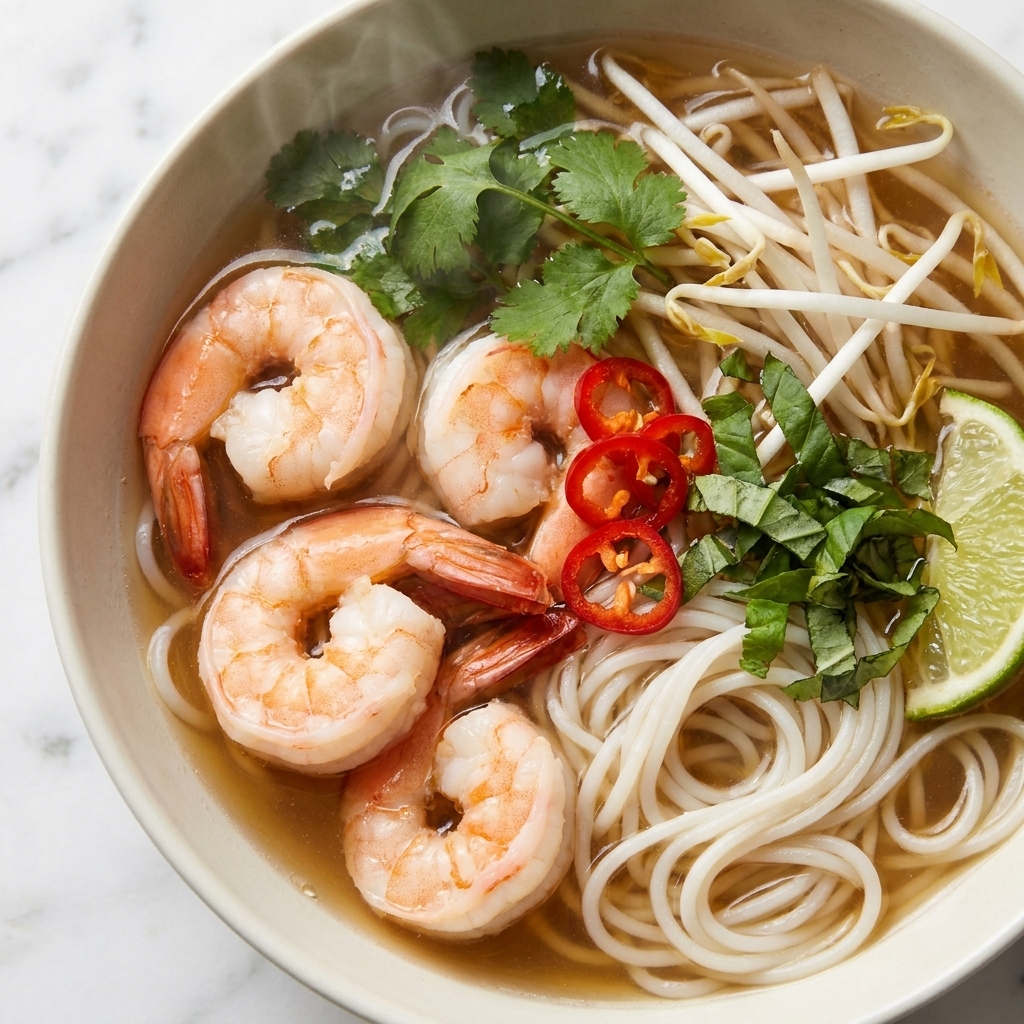
Some nights call for a bowl of soup that tastes like it took all day, even though it only took thirty minutes. This one leans on shrimp shells, garlic, and ginger to build a broth with real depth, then finishes with plump shrimp, slippery rice noodles, and a handful of fresh herbs.
It is the kind of soup I make when the fridge has a few shrimp left and a lime rolling around the crisper drawer. Bright and savory, a little spicy if you want it, and done before a pot of rice would even finish cooking.
Building Blocks of a Great Bowl
Good broth starts with good shrimp, so buy the biggest ones you can find and keep every shell. Everything else on this list is common pantry or produce aisle stuff most grocery stores carry.
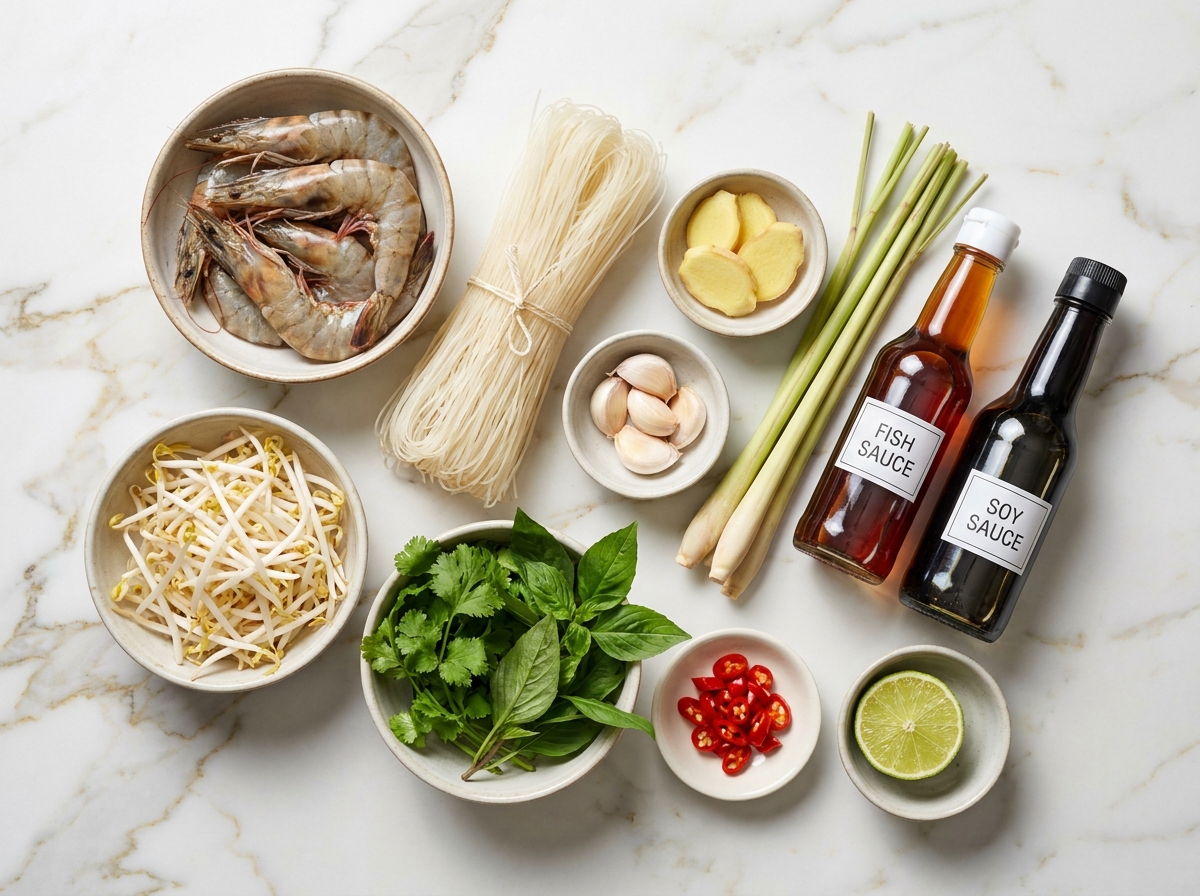
- Large shrimp. The main event, sweet and quick-cooking, and the shells go straight into the broth for extra flavor.
- Chicken or vegetable broth. The base of the soup, so use one you would happily drink on its own.
- Garlic. Adds a savory backbone the moment it hits the hot oil.
- Fresh ginger. Brings warmth and a little bite that cuts through the richness of the broth.
- Lemongrass. Optional but worth it, giving the broth a citrusy lift that sets it apart from a basic chicken soup.
- Fish sauce. The salty backbone of the broth, a small amount goes a long way.
- Soy sauce. Deepens the color and rounds out the saltiness alongside the fish sauce.
- Rice vermicelli noodles. Cook fast and soak up the broth without turning gummy.
- Bean sprouts. Added right before serving for a fresh crunch against the soft noodles.
- Green onions, cilantro, and Thai basil. The finishing herbs that make the bowl taste alive.
- Lime. A squeeze at the table brightens every spoonful.
- Red chili. Optional, sliced thin and added to taste for anyone who wants real heat.
From Broth to Bowl in One Pot
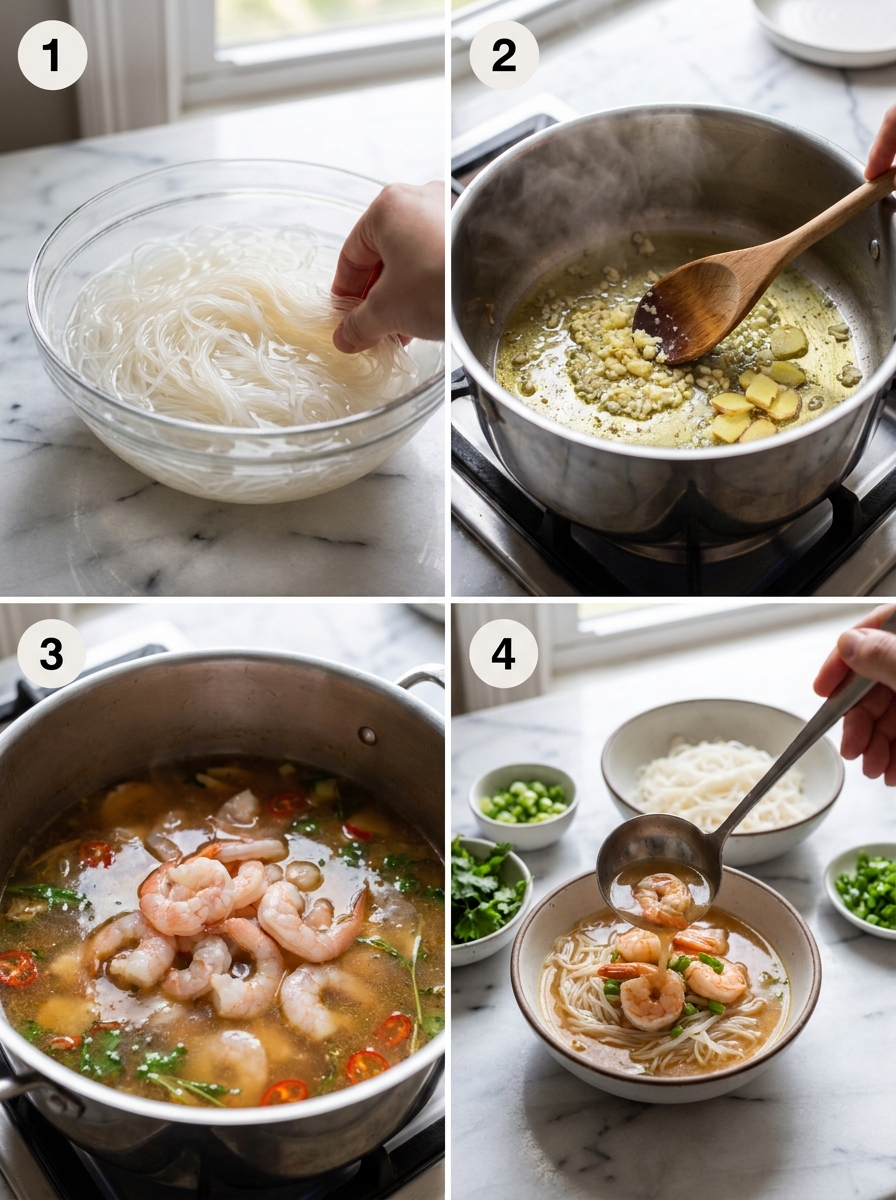
- Soak the noodles. Cover the rice vermicelli in warm water for 15 to 20 minutes until pliable but not fully soft, then drain well. They finish cooking once the hot broth hits them.
- Sauté the aromatics. Heat the oil in a large pot over medium heat, then add the garlic, ginger, and lemongrass. Cook for about a minute until fragrant but not browned, since burnt garlic turns bitter fast.
- Build and simmer the broth. Pour in the broth, fish sauce, soy sauce, and sugar. Bring it to a gentle boil, then lower the heat and simmer for 15 minutes so the flavors meld. Strain out the solids if you want a clear broth.
- Cook the shrimp. Add the shrimp to the simmering broth and cook for 2 to 3 minutes, just until they turn pink and opaque. Pull the pot off the heat right away so they stay tender.
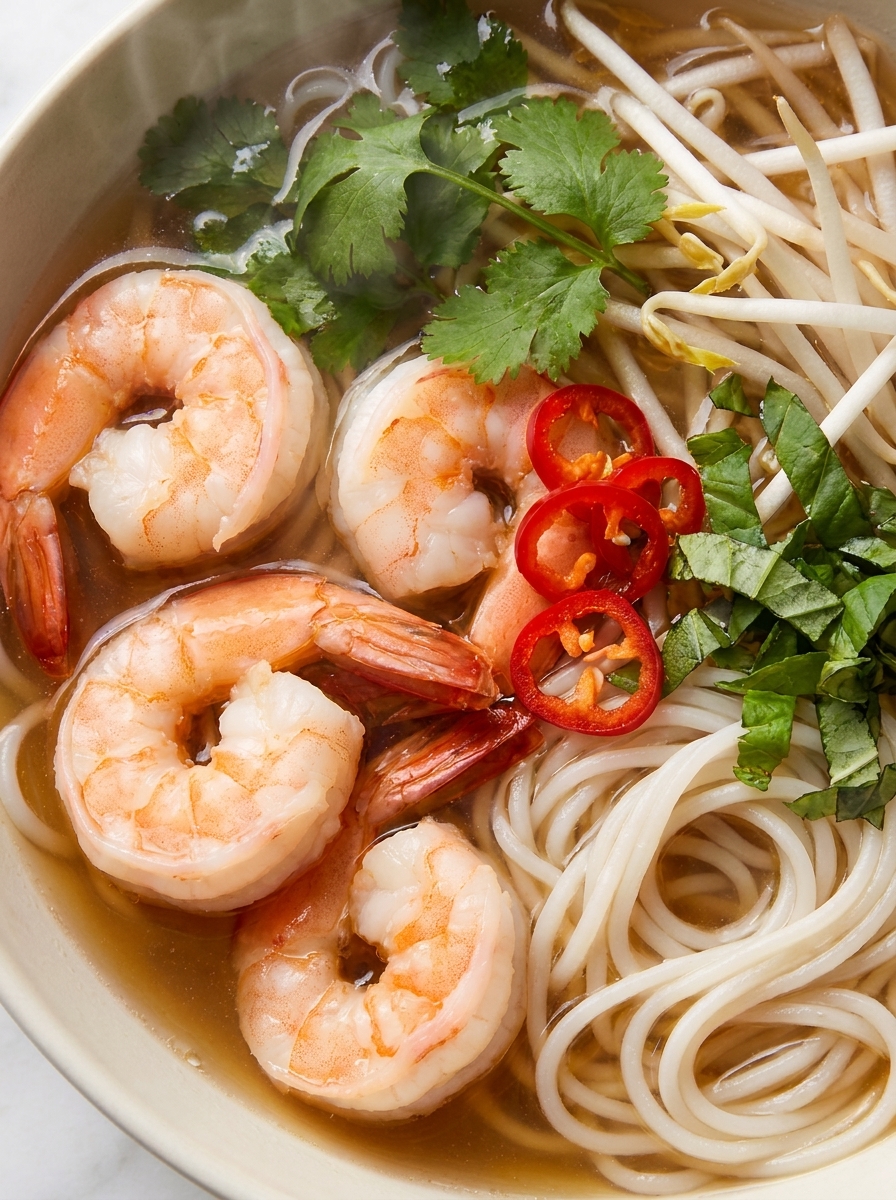
- Assemble the bowls. Divide the soaked noodles among bowls, ladle the hot broth and shrimp on top, then finish with bean sprouts, herbs, sliced chili, and a lime wedge.
Why the Shells Belong in the Pot
Most of the deep flavor in this soup comes from a step people skip. Toss the shrimp shells into the broth while it simmers, then strain them out before serving. Shells hold a surprising amount of flavor, and a few minutes of simmering pulls it into the liquid instead of the trash. For even more depth, sauté the shells in the oil before adding the garlic and ginger, then continue as usual. Fish sauce has been used across Southeast Asia for centuries to add savory depth without extra meat, and a splash does more work here than a whole extra cup of broth. Start with the amount in the recipe and taste before adding more, since brands vary a lot in saltiness.
Keeping the Noodles From Turning Mushy
Rice noodles go from perfect to gluey fast, and the fix is timing, not less soaking. Soak them in warm water rather than boiling them outright, since a full boil cooks them too far before they even hit the broth. Drain well and set them aside, then add them to bowls only right before ladling the hot broth over top. If you are making this for meal prep, keep the noodles, broth, and toppings in three separate containers. Combine them only when you are ready to eat, otherwise the noodles keep absorbing liquid in the fridge and turn soft and clumped by the next day. The same rule applies to our Thai tom yum with shrimp, another bowl where the noodles should stay separate from the broth until serving time.
Herbs and Toppings Worth Adding
The broth and noodles are only half the bowl. Fresh herbs and a squeeze of lime at the table wake everything up right before the first bite. Cilantro and Thai basil are the classic pairing, but mint works too if that is what you have. A spoonful of crispy fried shallots or a drizzle of chili oil turns this from a weeknight soup into something you would order at a restaurant. If shrimp is not your thing tonight, this broth works just as well with sliced chicken breast or cubes of firm tofu simmered until cooked through. Fans of our Thai coconut chicken soup will notice a similar bright, herb-forward finish here, just without the coconut milk. If you would rather keep things closer to home, our chicken noodle soup uses the same gentle simmer-then-strain approach for a clear broth, just built on totally different aromatics.
Turning the Heat Up or Down
This soup is mild as written, which makes it easy to adjust at the table instead of in the pot. Sliced red chili on top lets everyone control their own heat level. For more warmth cooked into the broth itself, add a spoonful of chili garlic paste along with the garlic and ginger, or simmer a whole bird's eye chili in the broth and remove it before serving. On the milder end, skip the chili altogether and lean on lime and herbs for brightness instead. The FDA's seafood guide notes shrimp are safe once they reach 145°F, which usually lines up with the moment they turn pink and curl into a loose C shape, so use that as your cue no matter how spicy you make the broth.
Make It Ahead Without Losing the Broth
The broth is the part worth making ahead. It keeps in the fridge for up to four days and often tastes even better the next day once the aromatics have had more time to settle in. Store the noodles separately in a lidded container with a little oil tossed through so they do not stick together. Cooked shrimp are best added fresh, since reheating them twice turns them tough and rubbery, so simmer a new batch in the reheated broth rather than microwaving leftover shrimp directly. If you like the idea of a big-batch soup you can portion out all week, our rice soup and this one make a good rotating pair, since both keep well and reheat in minutes.
Najczęściej zadawane pytania
- Can I use frozen shrimp for this soup?
Yes, and it is what most people will use on a weeknight. Thaw the shrimp under cold running water for a few minutes, then pat them completely dry before adding them to the broth so they sear and simmer instead of releasing extra water.
- What noodles work best for this recipe?
Thin rice vermicelli is the easiest to work with since it only needs a soak, but flat rice noodles or rice sticks work well too. Whatever you choose, soften them separately from the broth so they do not turn mushy.
- Can I make this soup gluten-free?
Mostly yes. Fish sauce is naturally gluten-free, so swap the regular soy sauce for tamari or a gluten-free soy sauce and double check your broth's label. Rice noodles are gluten-free on their own.
- How do I store and reheat leftovers?
Keep the broth, noodles, and any cooked shrimp in separate containers in the fridge for up to four days. Reheat the broth gently on the stove, then add fresh noodles and simmer new shrimp in it rather than microwaving already-cooked shrimp.
- Can I make this soup without shrimp?
Sure. Sliced chicken breast or cubes of firm tofu both work well simmered directly in the finished broth until cooked through. Adjust the fish sauce slightly since chicken and tofu will not add the same salty depth shrimp shells do.
- Why did my noodles turn gummy or clumped together?
That usually means they soaked too long or sat in the broth too early. Soak just until pliable, drain well, and add them to the bowl right before you ladle the broth over the top.
- How spicy is this soup?
As written it is mild, with the heat left up to whoever is eating. Add sliced chili to your own bowl, or stir chili garlic paste into the broth while it simmers if you want every bowl spicy from the start.
