
 Przypnij
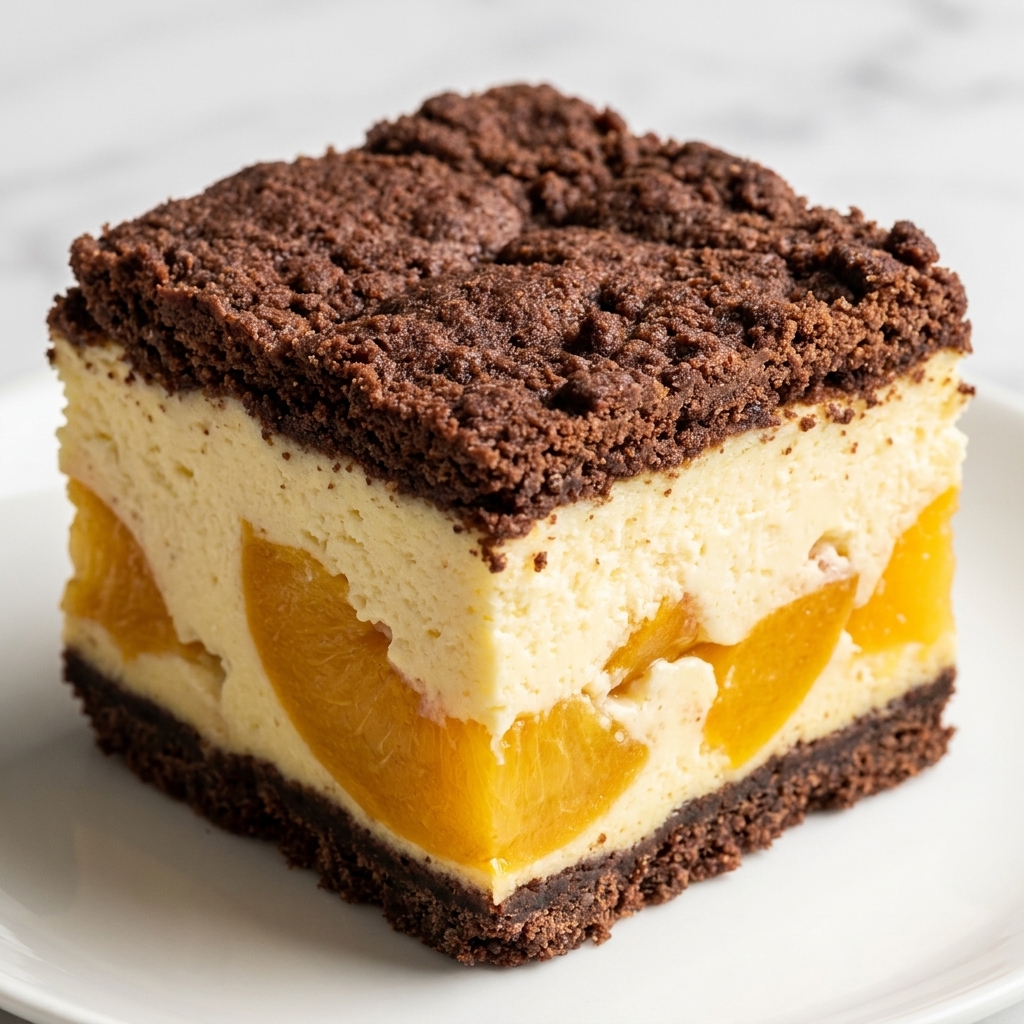
Sernik Izaura is the cake that shows up when there is a full table to feed. Cocoa crumb on top, a soft farmer's cheese center, and jammy peach slices running through the middle. It is named after the Brazilian telenovela that had half of Poland parked in front of the television in the 1980s, and it has earned a spot at name-day parties and Sunday lunches ever since.
This version keeps the two things people love about the original: the contrast between the dark, slightly bitter crumb and the sweet, custardy cheese, and the surprise of soft peach in every bite. It takes some patience since the dough needs to chill and the cake needs to cool, but none of it is difficult. If you can grate cold dough and whip a filling, you can build this cake.
Three Simple Parts, One Rich Cake
Nothing here is exotic. The cake earns its reputation from ratios and technique, not rare ingredients. Buy the best farmer's cheese you can find, since it carries most of the flavor.
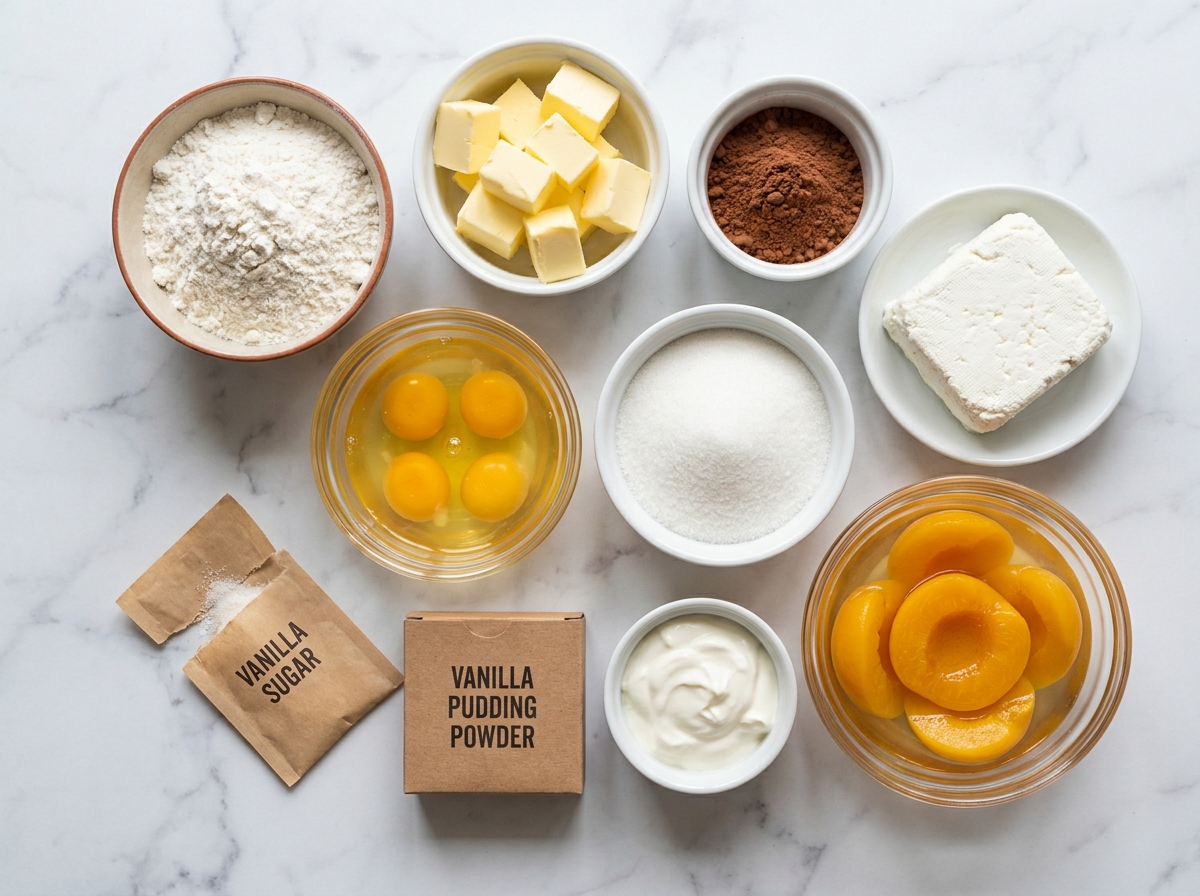
- All-purpose flour. Builds the cocoa dough into a base that stays crisp on the bottom and crumbly on top.
- Cold butter. Keeps the dough short and easy to grate once chilled, instead of turning greasy.
- Cocoa powder. Gives the dough its dark color and a mild bitterness that balances the sweet cheese.
- Farmer's cheese. The heart of the filling. Grind it twice or pulse it in a food processor so the texture turns silky instead of grainy.
- Eggs. Whipped with the sugar first, they add lift and help the filling set into slices instead of collapsing.
- Instant vanilla pudding powder. A Polish baker's trick for insurance. It soaks up extra moisture so the center bakes firm.
- Canned peaches. Soft, sweet pockets running through the cheese. Drain them well or they water down the filling.
Building the Crumb and Cheese Layers
- Mix and chill the dough. Work the flour, sugar, vanilla sugar, baking powder, cocoa, butter, and sour cream into a shaggy dough. Mix by hand or with a mixer just until it holds together, then wrap it and chill for 2-3 hours, or freeze for about 40 minutes, until firm enough to grate.
- Press the base. Grease a 13x9-inch (33x23 cm) pan and coarsely grate about three quarters of the chilled dough across the bottom. Press it into an even layer with your fingers.
- Whip the filling. Beat the eggs with the sugar and vanilla sugar until pale and roughly doubled in volume. Stream in the cooled melted butter, then fold in the ground cheese and pudding powder by hand until smooth.
- Layer in the peaches. Spread half the cheese filling over the base. Scatter the drained, sliced peaches evenly across it, then spoon the rest of the filling on top and smooth the surface.
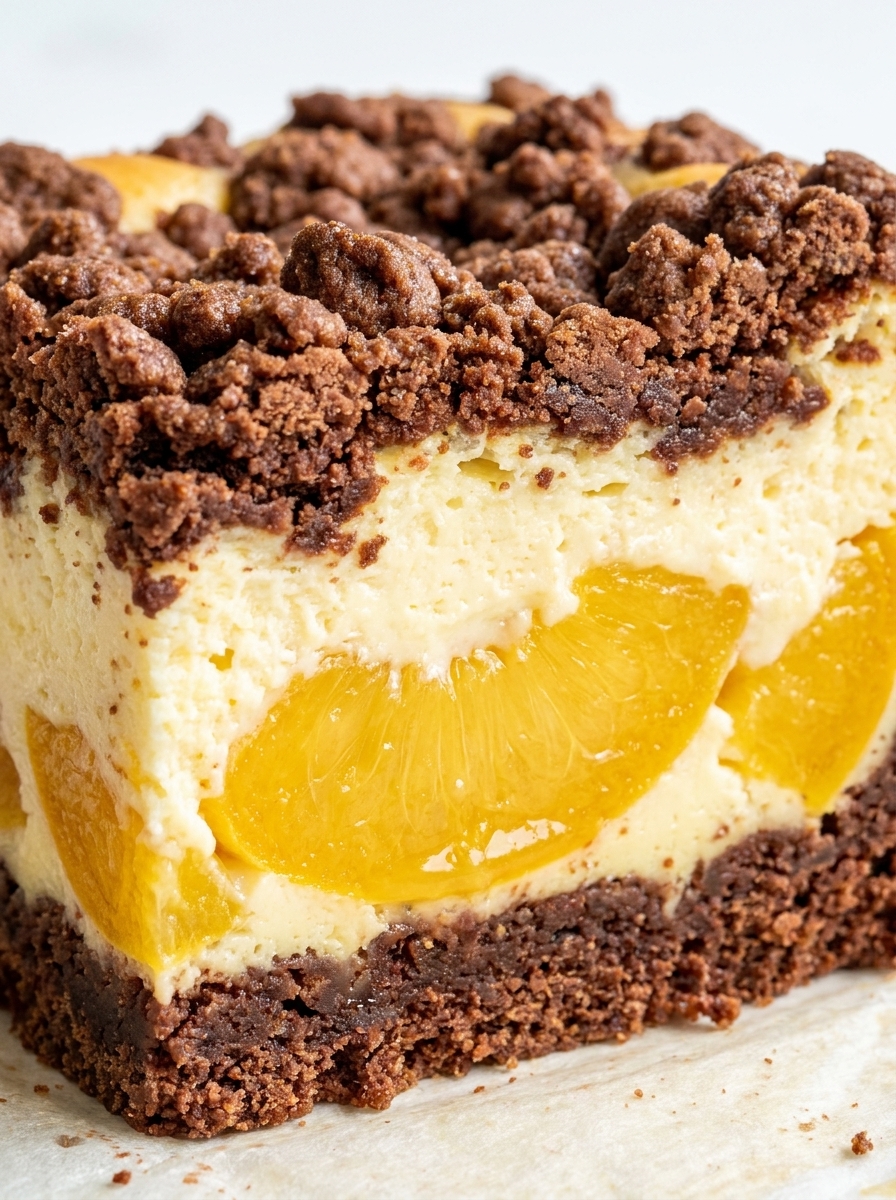
- Grate the crumble. Coarsely grate the remaining chilled dough directly over the filling so it lands in loose, even crumbs rather than one solid sheet.
- Bake until just set. Bake at 340°F (170°C) for 65-75 minutes, until the crumble looks dry and the center only jiggles slightly when you nudge the pan.
- Cool, then chill, before cutting. Let the cake cool completely in the pan, then refrigerate for at least 4 hours, ideally overnight, so the layers set into clean slices.
Getting the Crumble Right
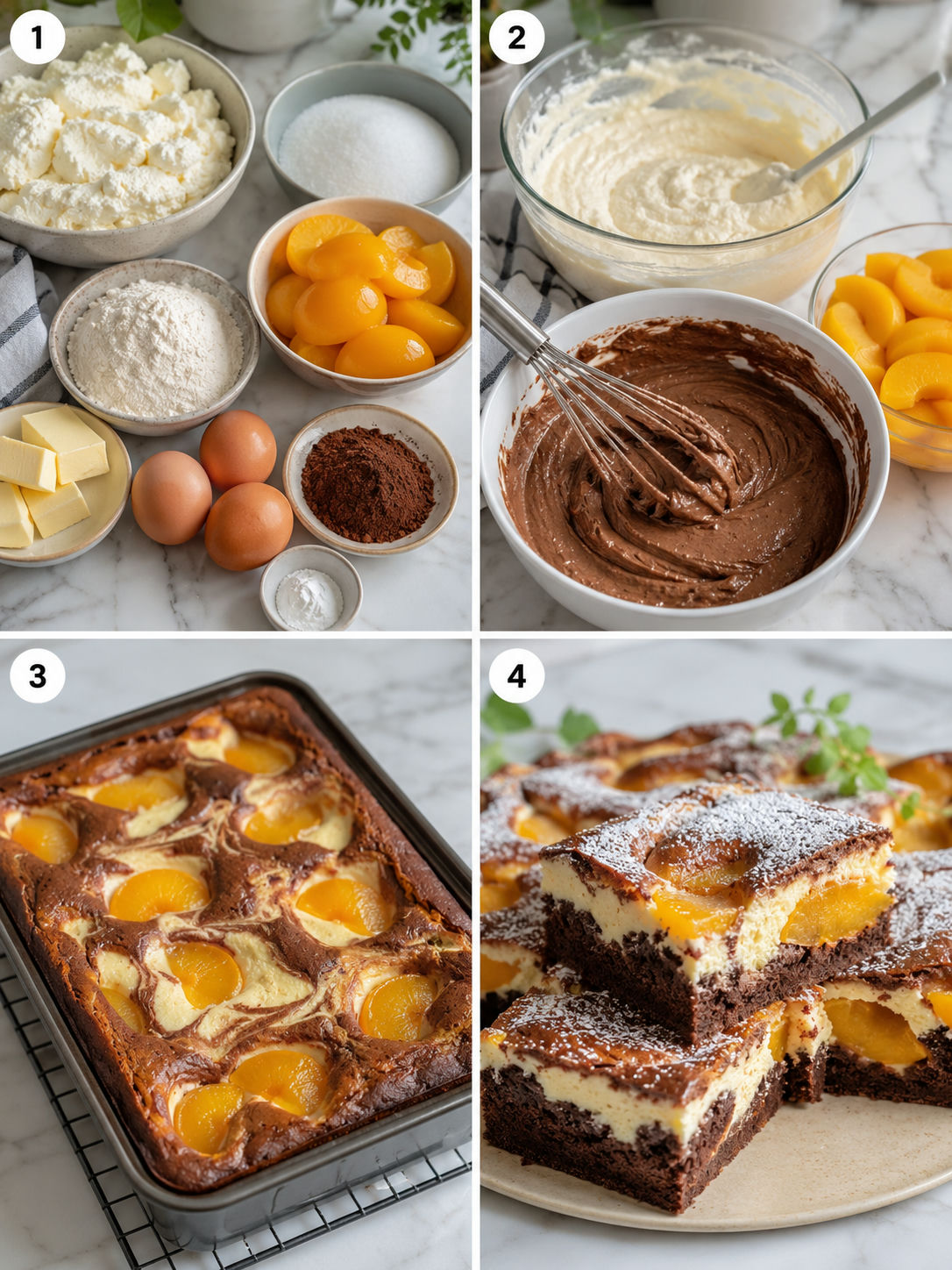
The crumble is what separates a good Sernik Izaura from a mediocre one. The dough has to be cold, or it smears into a paste under the grater instead of falling into loose crumbs. If your kitchen runs warm, freeze the dough in two batches: forty minutes for the base, then back into the freezer for the topping portion while you build the filling.
Grate it straight onto the filling in long strokes and resist the urge to press it down. Loose crumbs bake into a craggy, slightly crisp top that contrasts with the soft cheese underneath, which is the whole point of the cake. If you want to see the same base and crumb technique without the fruit, our classic Sernik Izaura is the recipe this one grew out of.
Fresh Peaches or Canned
Canned peaches in light syrup are traditional here for good reason. They are consistently ripe, already soft, and available all year. Drain them in a sieve for a few minutes and pat the slices dry before they go into the cake. Wet fruit is the most common reason the center stays gummy.
Fresh peaches work too when they are properly ripe. Peel them, slice thin, and macerate briefly with a spoonful of sugar to draw out excess juice. Frozen sliced peaches, thawed and drained hard, are the next best thing when fresh ones are not in season. For another peach-forward bake, our mascarpone and peach cake uses the same trick of well-drained fruit.
Why Grind the Cheese Twice
Polish farmer's cheese comes drier and more crumbly than American cream cheese, and straight out of the tub it leaves visible curds in your filling. Grinding it twice, or pulsing it hard in a food processor, breaks the curds down so the eggs and butter can bind into something closer to a custard.
Skip this step and the cake still tastes fine, but the slices come out grainy instead of dense and sliceable. Farmer's cheese carries a protein profile similar to the cottage cheese tracked in USDA's FoodData Central, which is part of why it holds its shape once baked. If you would rather skip the cocoa layer entirely, our Sernik Krakowski uses the same twice-ground cheese in a simpler, single-layer bake.
Storing and Making It Ahead
Sernik Izaura is actually better the next day, once the layers have had time to firm up and the flavors settle. Keep it covered in the fridge for up to 4 days. Because it is built on eggs and fresh dairy, do not leave slices sitting out past the two-hour window USDA recommends for perishable foods.
For longer storage, wrap individual squares tightly and freeze for up to two months, then thaw overnight in the refrigerator. The crumble stays a little softer after freezing, but the filling holds up well. It also pairs nicely on a dessert table next to our raspberry and white chocolate cheesecake.
Common Mistakes to Avoid
The two mistakes that come up most are rushing the chill and cutting too soon. Warm dough will not grate. It clumps into ropes that bake unevenly, so do not skip the freezer time.
This filling is baked, not raw, but it is still egg-based, so bake until the center barely jiggles rather than pulling the pan out early. The FDA's guidance on egg dishes is a good baseline for judging doneness in any baked custard like this one. The other trap is slicing while it is still warm. The cheese layer needs the fridge time to set, and cutting it too soon leaves you with a puddle instead of a square.
Najczęściej zadawane pytania
- What does the name Sernik Izaura mean?
The cake is named after Isaura, the heroine of a Brazilian telenovela that aired in Poland in the 1980s and became a national obsession. Home bakers started naming their newest cheesecake creation after the show, and the name stuck to this cocoa-and-cheese version with peaches.
- Can I use fresh peaches instead of canned?
Yes, as long as they are ripe and sliced thin. Peel them, slice them, and toss with a spoonful of sugar for a few minutes to pull out extra juice before layering. Skipping that step can leave the filling watery.
- What can I use instead of instant vanilla pudding powder?
Three tablespoons of cornstarch whisked with half a teaspoon of vanilla extract works as a substitute. It will not add quite the same flavor, but it does the same job of firming up the filling as it bakes.
- How far ahead can I make this cake?
Up to two days. Bake it, cool it, and refrigerate it covered. The flavor and texture actually improve after a day in the fridge as the layers settle.
- How should I store leftovers?
Keep leftover squares covered in the refrigerator for up to four days. This cake is meant to be served cold or at cool room temperature, not reheated.
- Why did my cheese filling turn out grainy?
Almost always because the cheese was not ground finely enough. Farmer's cheese needs a grinder pass or two, or a hard pulse in a food processor, until smooth. Straight from the tub it still has visible curds that stay grainy after baking.
- Can I freeze Sernik Izaura?
Yes. Wrap cooled, cut squares tightly in plastic and freeze for up to two months. Thaw them overnight in the refrigerator rather than at room temperature.
- What size pan should I use?
A 13x9-inch (33x23 cm) rectangular pan is the standard size for this amount of dough and filling. A springform works too, but budget a few extra minutes of baking since the layer sits deeper.
